
Key points
- This site’s representative CAT 320D2 indicates 20,000 – 22,000 kg and 0.8 – 1.2 m³; the CAT 330 indicates 29,900 – 30,500 kg and 1.2 – 1.9 m³. Choose first based on your daily volume, material, work area and truck matching—not only model size.
- 320D2, GC, GX and Next Generation are not substitutes for the year or condition of a used machine. The same model can have different engines, weights and attachments by market, year and configuration; confirm the data plate, serial number, configuration list and inspection of the specific unit.
- Transport plans for the 20-ton and 30-ton classes must be confirmed from the actual operating weight, transport dimensions, attachments and the port route. Flat rack, ro-ro or other methods are not determined automatically by model; the written quotation must state the machine and shipping conditions.
- Site prices are reference FOB prices, not final quotations. The actual price of a used machine depends on the year, operating hours and condition of that unit; availability and lead time are confirmed in a written quotation.
First define whether you need the 20‑ton class or the 30‑ton class
This is not just a small-versus-large distinction. The 20-ton class usually fits changing tasks in confined spaces, trenches, utilities, roadworks and general earthmoving; the 30-ton class has greater operating weight, bucket size and reach, suiting continuous high-volume excavation, quarry loading or loading larger trucks. Which class fits depends on how much material you need to move each day, whether the site has enough swing space, and transport and downtime costs.
Using the site’s two representative models as examples, the difference between CAT 320D2 and Caterpillar 330 is more than weight. The 330 has larger bucket range, digging depth, ground-level reach and discharge height. It is not automatically more economical for every job; if daily volume is limited, the site is narrow or trucks are small, a larger machine may not convert capacity into effective output.
| Item | CAT 320D2 | Caterpillar 330 |
|---|---|---|
| Operating weight | 20,000 – 22,000 kg | 29,900 – 30,500 kg |
| Bucket capacity | 0.8 – 1.2 m³ | 1.2 – 1.9 m³ |
| Engine power | 110 kW / 148 HP | 202 HP / 151 kW |
| Maximum digging depth | 6,700 mm | 7,010 mm |
| Maximum ground working reach | 9,900 mm | 10,740 mm |
| Maximum discharge height | 6,800 mm | 7,040 mm |
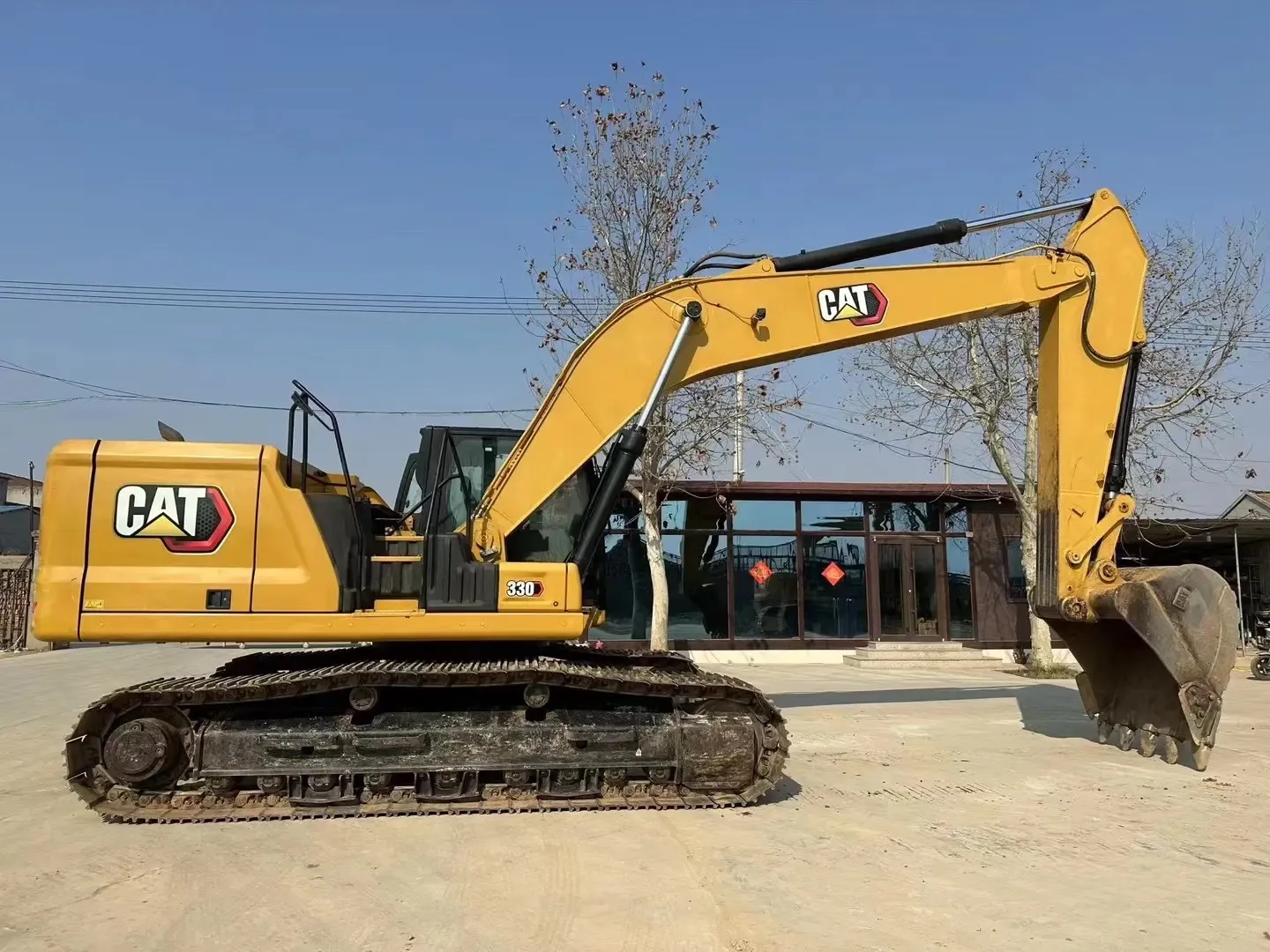
How to read 320, 330, D2, GC, GX and Next Generation
The 320 and 330 help you identify the class, but they do not replace a configuration spec for a specific machine. This site’s 320 series includes CAT 320CL, CAT 320D, CAT 320D2, CAT 320 GC, CAT 320GX and CAT 323 Next Generation; the 30-ton class also shows CAT 329D and Caterpillar 330. These are representative models, not a promise that every version shares the same parameters or is interchangeable.
Letters and suffixes should be treated as part of the model name, not as automatic indicators of year, emissions level or condition. Caterpillar’s archived 320D2 page corresponds to a 2017 configuration with emissions Tier 3 / Stage IIIA; its engine and operating weight may not match the same name in another market or a specific used machine. When you request a quote, ask for photos of the nameplate, the serial number, year, engine model, operating hours, and boom/arm/bucket configuration.
GC and GX should not be read as a sequence of new/old or better/worse. On the 320 GC page, Caterpillar positions it for general-duty use, simpler operation and lower ownership cost; on the 320 GX page it targets municipal and general construction with simplified features, easy maintenance and fuel efficiency. Those are the manufacturer’s product positions for the configurations shown on those pages, not performance guarantees for any used unit.
Next Generation is a product-generation name used by Caterpillar. It does not prove a used machine is newer, has fewer hours or a higher specification; always confirm year, serial number, configuration and inspection records. Available configurations and functions may also vary by country.
| Name on the page | Documents to request | Why verify it |
|---|---|---|
| CAT 320D2 | Nameplate, serial number, year, engine and accessory list | The same name can vary by region and configuration |
| CAT 320 GC | Year, operating hours, undercarriage and hydraulic condition | GC is a model positioning label and does not replace an actual inspection. |
| CAT 320GX | Year, engine, configuration and maintenance history. | GX is a model positioning label and does not replace an actual inspection. |
| CAT 323 Next Generation | Year, chassis/serial number, configuration and inspection records. | Next Generation alone does not describe the condition of a used machine. |
| Caterpillar 330 | Nameplate, operating hours, bucket, boom, arm and transport dimensions. | The configuration of the 30-ton class affects operation and transport arrangements. |
ImportantModel name, catalogue photos and spec sheet are for initial screening. When buying a used machine, the final comparison should be between specific units with verifiable data, not between generic model names.
Choose by job and truck, not only by bucket size
Break the project into answerable questions: is the main material loose soil, wet clay, sand and gravel, or rock; what is the daily target volume; will you be loading trucks continuously; what are the truck’s payload, box volume and box height; and can the site accommodate safe positioning of machine and truck. The 320 series, 20-ton class, is common for trenches, foundations and general earthmoving; the 330, 30-ton class, suits larger-volume excavation and continuous cycles with larger buckets. Caterpillar’s 330 product page also lists site preparation, municipal works and large-volume excavation among its applications.
Don’t match the truck only by box volume. For a 15 m³ box, you also need material density and allowed payload to decide how much to load per pass, how many passes are required and whether you will overload. The ranges 0.8 – 1.2 m³ for the 320 series and 1.2 – 1.9 m³ for the 330 are representative ranges on this site; the actual bucket, fill factor and material must be confirmed for each machine and jobsite.
When calculating operating cost, estimate per shift the effective volume, fuel, operator, undercarriage wear, maintenance, transport and downtime risk. Larger machines have higher cycle capacity but require separate budgets for purchase, transport, fuel and large components. Do not replace an actual used machine’s fuel-consumption record with a fuel-saving claim from a new-machine manufacturer page.
- If the work is mainly trenches, foundations, site grading and moves between multiple sites, first assess whether the 320 series 20-ton class is sufficient.
- If you will do sustained high-volume excavation, quarry loading or loading of larger trucks, compare the cycle capacity and total cost of the 330 30-ton class.
- Ask the seller to specify the bucket, quick coupler and attachments, since they change actual performance, weight and transport dimensions.
- Have the site manager confirm truck positioning, swing space, ground bearing capacity and work organization rather than deciding by model alone.
Transport and FOB quotation: confirm the unit’s exact dimensions and weight first
Do not quote international transport simply as “320” or “330.” The carrier and port need the specific machine’s operating weight, transport length, width and height, bucket and attachments, whether parts are removed, and the unit’s lashing plan. Maersk treats cargo exceeding the length, width or height of a standard flat rack or open-top container as out-of-gauge, and stresses that declaring exact dimensions and correct lashing is related to safety and voyage planning.
Therefore container, flat rack, ro-ro or other shipping method should be confirmed from the actual machine, loading port, destination port, route and carrier. The representative 30-ton class model weighs 29,900 – 30,500 kg versus 20,000 – 22,000 kg for the representative 20-ton class, so it is especially important to provide accurate data early. Do not treat site photos or a previous shipment’s method as a promise for the next unit.
| Data | Why it is needed | Who confirms |
|---|---|---|
| Operating weight and transport dimensions of the specific unit | Define shipping equipment, lashing and port operations | Seller, carrier and freight forwarder |
| Bucket, quick coupler and loose parts | Confirm whether they ship with the machine and the total dimensions | Seller and freight forwarder |
| Loading port, destination port and destination country | Confirm available routes and local transport conditions | Buyer and freight forwarder |
| FOB responsibilities and shipment timing | Make quotation terms comparable | Buyer and seller |
For basic FOB procedures, maritime documents and customs clearance at destination, see this site's articles “How to import heavy machinery from China: step-by-step guide” and “How to prepare an FOB quotation request for machinery”. Before payment and shipment, confirm with your local customs broker and carrier whether used machinery is permitted for import, the required permits, tariff classification and your country’s low-bed transport requirements.
Used CAT 320 and CAT 330: inspection focus changes with the class
Evaluate each machine by the actual unit, not only the hour meter or a generic spec sheet. In the 20-ton class, besides engine, hydraulics and undercarriage, confirm that the bucket, quick coupler, hammer lines and other attachments suit the trenches or earthmoving work you plan. In the 30-ton class, pay special attention to the large bucket and boom/arm configuration, hydraulic motions, swing and undercarriage performance under full load to ensure they match your truck-loading or excavation requirements.
Ask the seller for videos of cold starts, all hydraulic functions, travel, swing and loading. Put serial number, engine number, year, hours, known repairs, included attachments and missing parts into the written quotation. If you require a third-party or your technician’s inspection, specify scope, timing and how findings will be handled in advance.
For a full ID and inspection checklist—hours versus wear, undercarriage, engine and hydraulics—see this site’s article “What to check before buying a used excavator”. This guide does not repeat that checklist; it helps you decide whether to start searching in the 20-ton class or the 30-ton class.
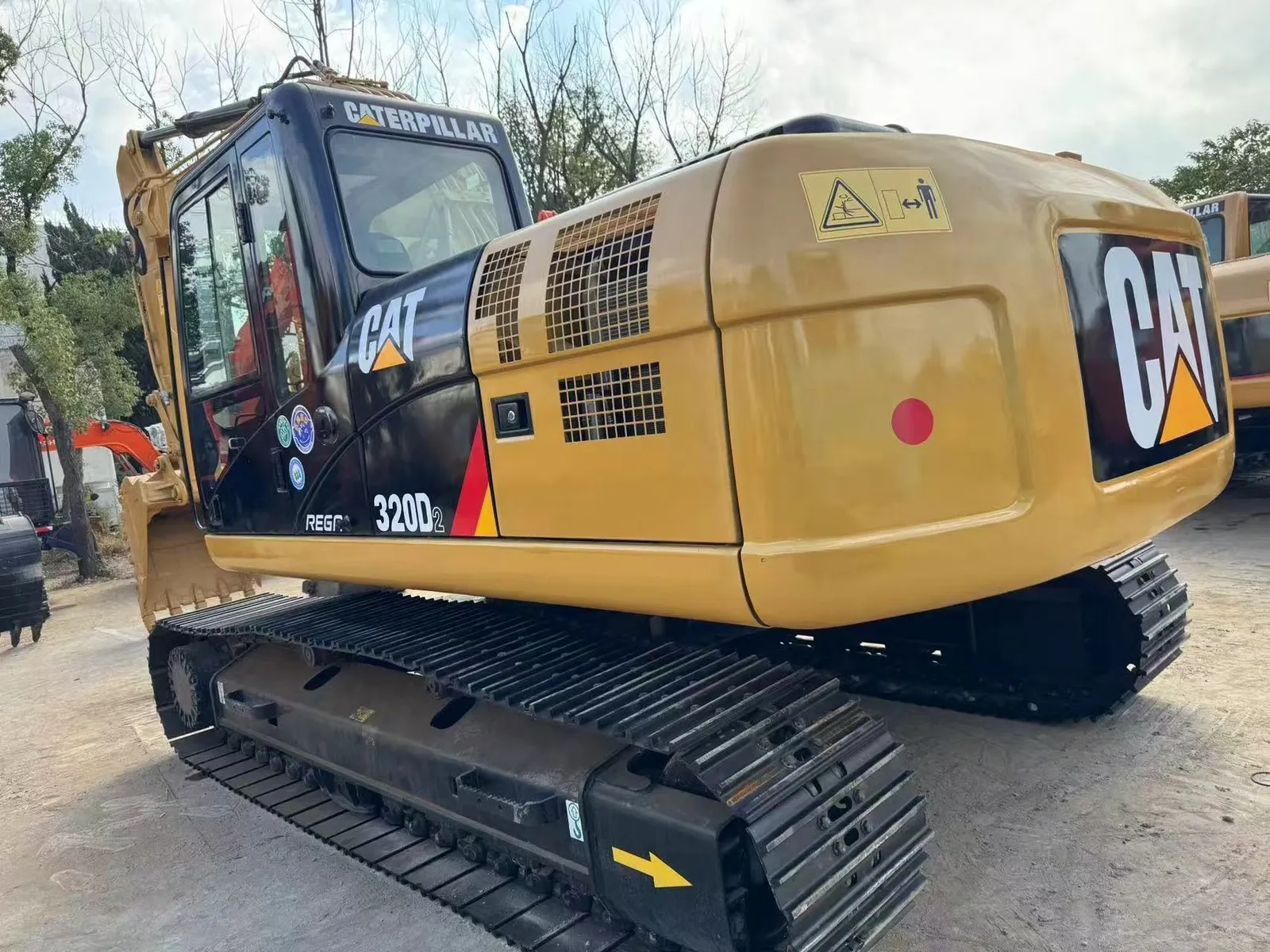
Site representative models and reference FOB prices
The table below shows representative models currently listed on this site and reference FOB prices, not final quotations. It is intended to show relative positions within a model family and does not represent market prices for all years, hours or configurations. The actual price of a used machine depends on that unit’s year, hours and condition, and varies with configuration, loading port and quotation date.
| Model | Engine indicated on this site | Reference FOB price |
|---|---|---|
| Caterpillar 320CL | CAT 3066T | US$22,800 |
| CAT 320D | C6.4 ACERT | US$27,800 |
| CAT 320D2 | Cat C6.4 | US$27,800 |
| CAT 320 GC | C4.4 | US$49,800 |
| CAT 320GX | Not indicated | US$53,000 |
| CAT 323 Next Gen | C7.1 | US$59,800 |
| Model | Engine indicated on this site | Reference FOB price |
|---|---|---|
| CAT 329D | C7 ACERT | US$33,800 |
| Caterpillar 330 | C7.1 | US$79,800 |
ImportantCAT and Caterpillar excavators are other-brand equipment: this site shows representative models, mainly used, that YUYAN supplies on request and that are not YUYAN-made; availability, the specific unit and lead time are confirmed by written quotation. CAT and Caterpillar are registered trademarks of Caterpillar Inc.; this site is not affiliated with Caterpillar Inc.
Frequently Asked Questions
For a 15 m³ body should you choose a CAT 320 or a CAT 330?
Do not decide based only on a 15 m³ body. Also provide material density, the truck’s allowable payload, body height, daily volume and site space. Among the site’s representative models, CAT 320D2 has a bucket of 0.8 – 1.2 m³ and the Caterpillar 330 has 1.2 – 1.9 m³; a larger bucket range can reduce passes, but avoid overloading and confirm the actual bucket.
Can a CAT 320 be used in a quarry?
It can be considered, but first confirm the specific material, daily volume, included bucket or breaker, undercarriage condition and site organization. The 320D2 official page lists heavy construction, truck loading, trenching and lifting among its configured applications; for continuous high-volume quarry work also compare the capability and total cost of 30-ton class machines.
What does D2 mean in a CAT 320D2?
D2 is part of the model name, not a separate indicator of year, hours or condition. Caterpillar’s archived page for the 320D2 corresponds to a 2017 configuration with emissions rating Tier 3 / Stage IIIA; when buying, always confirm the machine nameplate, serial number, year and configuration list for the specific unit.
Why is the reference FOB for a CAT 330 much higher than for a CAT 329D?
Don’t infer the cause from model alone. On this site the reference FOB for a CAT 329D is US$33,800 and for a Caterpillar 330 is US$79,800; these are prices for different representative models. The actual difference depends on the unit’s year, hours, condition, configuration, attachments and shipping terms; a reference FOB price is not a final quotation.
What should I ask when requesting a quote?
State whether you want the 20-ton class or the 30-ton class, main material, daily volume, truck details, destination port and acceptable year and hours range; request the nameplate, serial number, engine, attachments, work video, inspection conditions, operating weight, transport dimensions and a written FOB quote. That lets you compare specific machines on equivalent terms.
Sources consulted
- Caterpillar: medium excavator 320D2 (2017) (in English)Caterpillar
- Caterpillar: hydraulic excavator 320 GC (in English)Caterpillar
- Caterpillar: hydraulic excavator 320 GX (in English)Caterpillar
- Caterpillar: hydraulic excavator 330 (in English)Caterpillar
- Caterpillar: Next Generation excavators (in English)Caterpillar
- Maersk: out-of-gauge cargo (in English)A.P. Moller - Maersk
- Caterpillar: copyright and trademark statement (in English)Caterpillar
External sources explain general rules; specific taxes, permits and contractual conditions depend on the destination country authority and the written contract.
With the target model and destination port, the next step is to verify the specific equipment and the quotation.
Submit your purchase request ↗Back to the purchasing guide ↗