
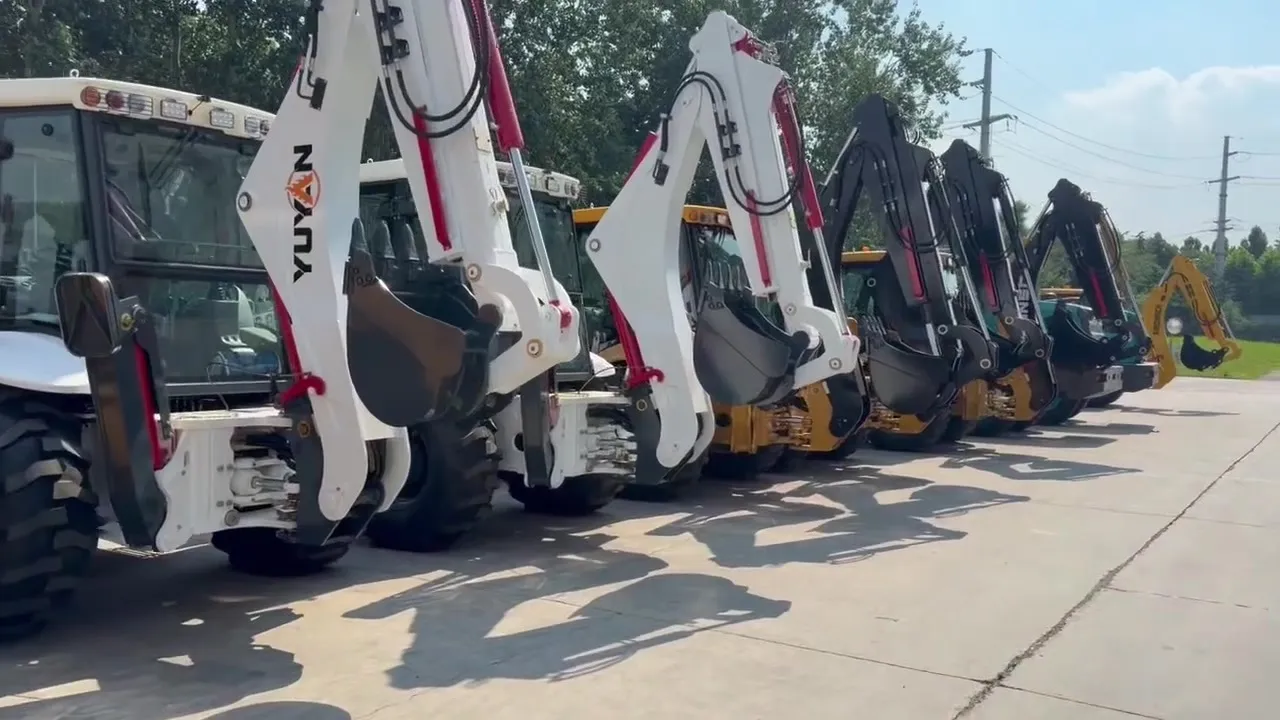
Key points
- Catalog transport dimensions for 2026 are 6,050 × 2,465 × 3,813 mm, with operating weight 8,200 kg. Width and height exceed the 40HQ door example shown here; do not treat the catalog transport dimensions as the confirmed post-dismantle container dimensions.
- If you intend to load 2 units into 1×40HQ after dismantling, first verify the plan applies to the chosen configuration. Specific version, list of removed parts, transport envelope, in-container arrangement and reassembly plan must be written into the quotation and the packing list.
- Before shipment, require traceability for each removed part. During loading, keep photos or video of machine entry, location of loose parts, blocking, lashing, sealing and the seal number, and record the container number and seal number.
- Under FOB per Incoterms 2020, risk normally passes when the goods are on board at the named loading port; the buyer contracts the main carriage. On arrival, first check the seal and parts, then reassemble, inspect and test according to the manufacturer’s instructions.
First compare the machine, container interior and door dimensions
When asking how to ship a backhoe loader in a 40-foot container, confirm whether it is High Cube. Here 40HQ refers to the high-cube container, not standard height. Also distinguish interior space from the door opening: the cargo must pass through the door and leave room inside for loading and securing. The published full dimensions of the YUYAN 388 are for initial assessment only and do not certify transport dimensions after disassembly.
| Item | Length | Width | Height |
|---|---|---|---|
| YUYAN 388 transport envelope from the 2026 catalog | 6,050 mm | 2,465 mm | 3,813 mm |
| 40HQ interior, carrier table example | 12,032 mm | 2,350 mm | 2,700 mm |
| 40HQ door opening, carrier example | — | 2,340 mm | 2,597 mm |
Hapag-Lloyd’s spec sheet lists internal width 2,350 mm, door width 2,340 mm and door height 2,597 mm. Compared with the published machine width 2,465 mm and height 3,813 mm, the original envelope does not meet the entry and internal limits of this type of high, closed container. This explains why our plan specifies optimized dismantling rather than judging loadability only by machine weight or container name. For example, when shipping a YUYAN backhoe loader into a container the front loader bucket is removed first; which additional parts must be removed and how to reduce height for quotation and the packing list depends on the offer and the packing list.
ImportantHapag‑Lloyd states these dimensions are examples from its container fleet and vary by manufacturer. Before shipment, verify the measured door and internal dimensions of the assigned container and the carrier’s requirements; the example does not guarantee a booking.
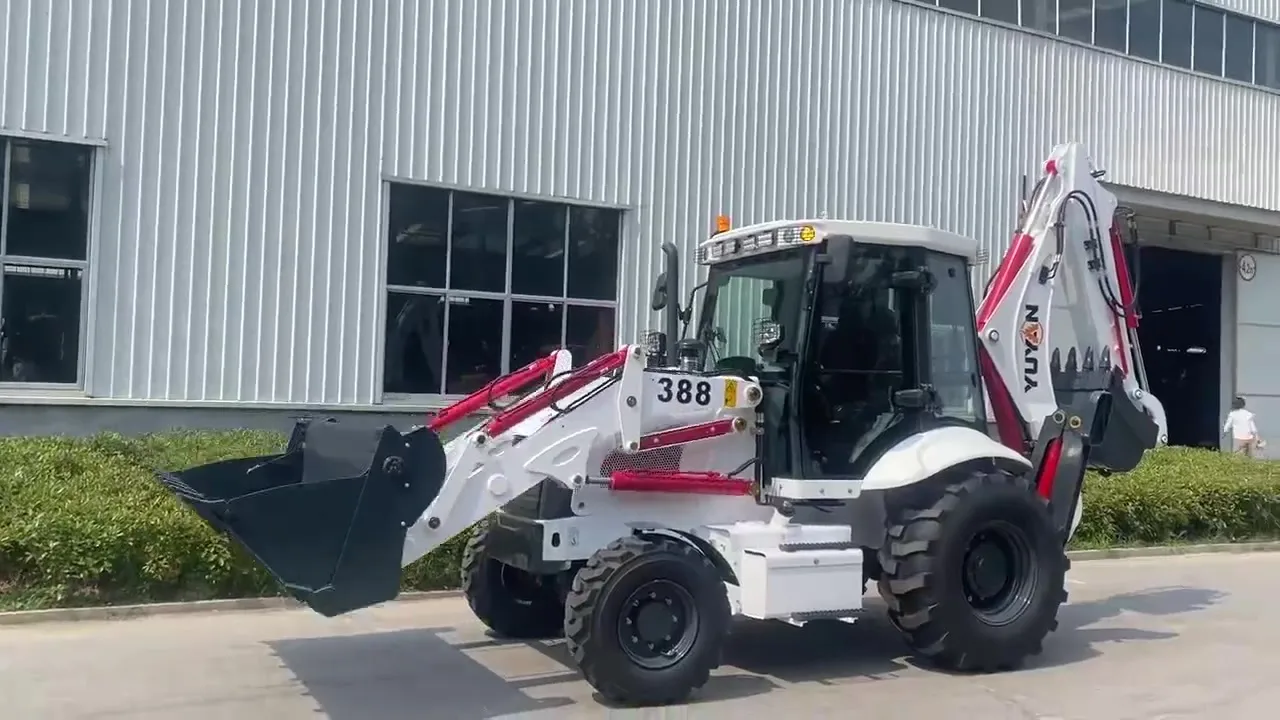
How to verify a proposed plan to load 2 units into 1×40HQ
If you plan to load 2 units into 1×40HQ by disassembly, the loading crew must first confirm feasibility with the carrier; this is not a disassembly instruction applicable to all configurations. If the order quantity, additional attachments or specific version differ, the in-container layout must be rechecked. Even with the same quantity, you cannot determine from photos alone that two machines and all loose parts can be placed inline to the catalogue length.
The series includes 388, 388T and 388H; the site also uses the 388T designation. When you request a quote, confirm the final model and its corresponding spec sheet. Do not infer differences between suffixes or apply one version’s shipping plan to another. The quotation must state which specifications apply to the machine you order and who performs the optimized disassembly and reassembly after transport.
If after comparing options you switch to flat rack or RoRo, reconfirm the machine’s shipping condition — do not automatically use the part counts from the container plan. Have the final option reflected in the quotation, the loading diagram and the packing list, and note which measurements still require on-site verification. You must know whether parts removed for packing travel in the same container as the machine, and if they ship separately how the receiving team will identify and track them. A change of shipment method must not leave unexplained inventory discrepancies.
- Ask the factory for transport dimensions, weights and placement drawings for the disassembled machine and for each separate package. On the drawing, link machine serial numbers to the packing marks; do not accept only a note that it ‘fits in a container.’
- Request a list of all removed parts and their fastenings. The final list is the quotation annex and the packing list — do not infer it from catalog photos.
- Ask for the loading and unloading methods, required lifting or auxiliary equipment, and the reassembly instructions, tools and personnel conditions at destination. If you do not have a maintenance team, state that before ordering.
The operating weight 8,200 kg is not the declared gross weight of the shipment. The loading team should calculate using the actual machines, loose parts, packaging and lashing materials, and verify container capacity and weight distribution. That items fit geometrically does not equal a safe shipment; do not treat the simple sum of two machines’ operating weights as carrier acceptance.
How to compare container, flat rack, RoRo and break-bulk
First decide whether you can accept the confirmed disassembly and reassembly, then compare available ports and carrier options. Maersk may classify oversized cargo that fits on a flat rack or open-top container as out-of-gauge; cargo that greatly exceeds standard container dimensions or weight may be handled as break-bulk. Wallenius Wilhelmsen’s RoRo service covers construction machinery; self-propelled equipment can drive on and off ramps on its own wheels. These are transport methods to evaluate, not confirmation that a Latin American route or your order has been accepted for carriage.
| Mode | When to evaluate it | What to confirm when requesting a quotation |
|---|---|---|
| 40HQ | Optimized disassembly confirmed so the machine fits a closed container; you may arrange reassembly. | Parts list, actual overall dimensions, internal container layout, securing and discharge conditions. |
| Flat rack | Confirmed transport dimensions do not fit a closed container and require special handling equipment. | Oversize declaration, protective packing, lashing, lifting and port acceptance conditions. |
| RoRo | The carrier accepts the construction machine and the load and discharge ports offer appropriate services. | Operational condition, dimensions, securing method, loose parts and route conditions. |
| Break-bulk | Other options are unsuitable and project cargo handling must be assessed separately. | Lifting plan, protective packing, cargo dimensions and weight, and port operations. |
For a closed container, also compare disassembly and reassembly work. For flat rack, declare the oversize envelope together with the protection plan. For RoRo, confirm the machine meets the carrier’s load and discharge conditions. Break-bulk is not the default option for every backhoe loader and is not a synonym for bulk raw materials. Don’t ask only which sea freight is cheaper: request quotes with the same loading port, destination port and machine condition, and state how additional attachments will travel.
ImportantFreight and transit times vary by sailing. Based on the actual shipment date, confirm route, equipment, scope of costs and destination discharge conditions with your logistics provider. Also budget local transport and reassembly resources; do not compare only the international leg.
Before loading, match the machine, removed parts and documents
The packing list must not just say “backhoe loader” with a single total quantity. For a machine delivered partly disassembled, the list should let your receiving team locate every part for each unit. For each removed part include name, quantity, originating machine and packing location. Pins, bolts and other fasteners must carry matching marks so arrival staff do not have to guess by shape. The final list is produced according to the actual disassembly plan.
| Document or record | Recommended contents | How you use it |
|---|---|---|
| Machine identity | Final model, serial number, corresponding spec sheet and factory inspection record | Match the quotation, video and the actual unit |
| Disassembly annex | Complete list of parts, fasteners, markings and reassembly requirements | Arrange tools, equipment and technicians in advance |
| Packing list | Quantity of each removed part, origin machine, package marks and loading position | Count parts on arrival and record discrepancies |
| Loading and securing plan | Transport dimensions, total weight, placement, blocking and lashing arrangement | Confirm feasibility with the loading team and carrier |
| Draft transport documents | Buyer and seller information, ports, cargo description, container number and seal number | Compare with invoice, packing list and booking |
| Reassembly and incident handling | Manual, support contact, record method and notification procedure | Contact as agreed if parts are missing or damaged |
- Step 1: Before disassembly, keep video of the whole machine, the nameplate and a basic function check as a reference of factory condition; the inspection should match the machine actually ordered.
- Step 2: Film the removed parts and their fasteners against the disassembly annex, mark the packages and protect vulnerable surfaces. If pipe connections are opened, protect them per manufacturer requirements to avoid contamination.
- Step 3: Before loading, check the container condition, entrance dimensions, floor and lashing points. Confirm that required handling equipment and personnel are in place.
- Step 4: Verify draft documents and the loading plan. If onsite disassembly changes, update the packing list; do not keep quantities from an earlier version.
Make sure visible marks in photos or video match the packing list and that fasteners inside each loose-parts bag can be traced to their installation position. A catalog photo does not replace inspection of the actual order. A clear list helps distinguish parts lost in transit, misidentified packages and reassembly errors, but records alone do not guarantee there is no damage.
During loading: check blocking, lashing and sealing evidence
The CTU Code from IMO, ILO and UNECE is a non-mandatory guidance for cargo transport units by sea and land and can be used as a reference for load and unload preparation. Its lashing principles include filling voids when necessary and using blocking, lashing or both to prevent cargo from sliding or tipping in any direction. Driving and parking the machine inside the container does not equal completed securing.
- Require the loading team to confirm the securing plan based on actual weight, center of gravity and in-container arrangement, avoiding concentration of heavy loads on small floor areas. Specific lashing points and equipment must be confirmed by competent personnel; do not designate them yourself from photos alone.
- Film the machines entering the container and their final positions, showing each unit, independent packages and part locations. Parts that need separate securing must not rely only on being placed next to the machine to prevent movement.
- Keep both close-up and wide views of chocks, lashing gear and their connection points. Per CTU Code principles, securing must not overload the container, machine structure, or devices, nor be over-tightened so as to damage the cargo.
- Before closing, verify the machines and all loose parts actually loaded. Save the final stowage plan and list version; record the container number and the actual total weight. When a seal is required, seal the container and record the seal number.
- Send the buyer the container number and seal number, photos of the closed door and close-ups of the seal; compare them with the applicable transport documents. The seal record identifies the shipment but does not replace a cargo inspection or prove there will be no incidents in transit.
ImportantPhotos and videos of the loading provide traceability but do not replace a professional lashing plan or the carrier’s review. If there is insufficient space, a change in packing dimensions, or a securing point is unusable, stop and re-confirm. Do not remove items from the packing list or reduce required securing to make a sailing.
FOB delivery point and buyer responsibilities
YUYAN 388 is quoted by configuration; the written offer prevails. Final model, configuration, loading port and packing scheme must be confirmed in writing. The quotation should specify the loading port and refer to Incoterms 2020; do not rely on simply stating FOB China, and do not treat the machine quotation as the total cost to the jobsite.
ICC Academy explains that under FOB the seller delivers by loading the goods on board the buyer’s nominated vessel at the loading port; normally risk of loss or damage passes at that delivery point. The seller arranges transport to the loading port, loading on board and export formalities. The buyer nominates the carrier, contracts the main carriage and pays freight. Factory loading or sealing is not equivalent to that on-board delivery; both parties should clarify the actual delivery arrangements and notice obligations.
- You must check international freight, cargo insurance, destination charges, import duties and taxes, local transport and reassembly costs separately. If you ask YUYAN to help coordinate these, specify in writing the scope of service, fees and how confirmations will be handled.
- YUYAN can assist with model selection, quotation, pre-shipment inspection, freight and insurance coordination, and preparation of export documents, and can help you check import requirements. That assistance does not automatically change the agreed point of transfer of risk.
- You and your local customs broker should verify destination-country import formalities and local requirements. YUYAN does not guarantee customs clearance, registration, or approvals. For the process and required documents, see our guide to importing heavy machinery from China.
ImportantICC Academy also warns that if containerized cargo is actually delivered to the terminal rather than directly on board, FCA is often more appropriate. Do not apply FOB automatically to every container order; when contracting, confirm the applicable term and the exact delivery place with the other party and your logistics provider.
On arrival: count, reassemble, test and record any issues
Before arrival, your receiving team should have the packing list, loading photos and reassembly instructions, and be ready with suitable unloading equipment. The CTU Code recommends checking that the container number and seal number match the transport documents and inspecting the exterior. Open carefully to avoid shifted cargo falling, and enter only after confirming safety and ventilation. When removing lashing and blocking, also prevent cargo movement once restraints are released.
- Step 1: before breaking the seal, photograph the container, container number and seal. If you find seal anomalies, impacts or signs of leakage, document them first and notify the relevant parties per the agreed procedure.
- Step 2: count each complete machine, removed parts and fasteners against the packing list; record packaging marks and damage, and verify which machine each part belongs to. Do not discard packaging or mix parts from different machines before you have verified quantities.
- Step 3: have a qualified technician reassemble according to the manufacturer’s instructions and check fasteners, locking devices, piping and guards. Required torques, tools and sequence must come from the model documentation and not be replaced by general experience.
- Step 4: before starting, check fluids, coolant, tire pressure, hydraulic hoses and fittings per the manual. If you find cracks, missing parts or leaks, stop and do not put the machine straight to work on site.
- Step 5: When it is safe, test start-up, instruments, steering, brakes, front loader and rear excavator in a controlled area. Observe hydraulic leaks, abnormal noises and operation, and keep the results for joint review.
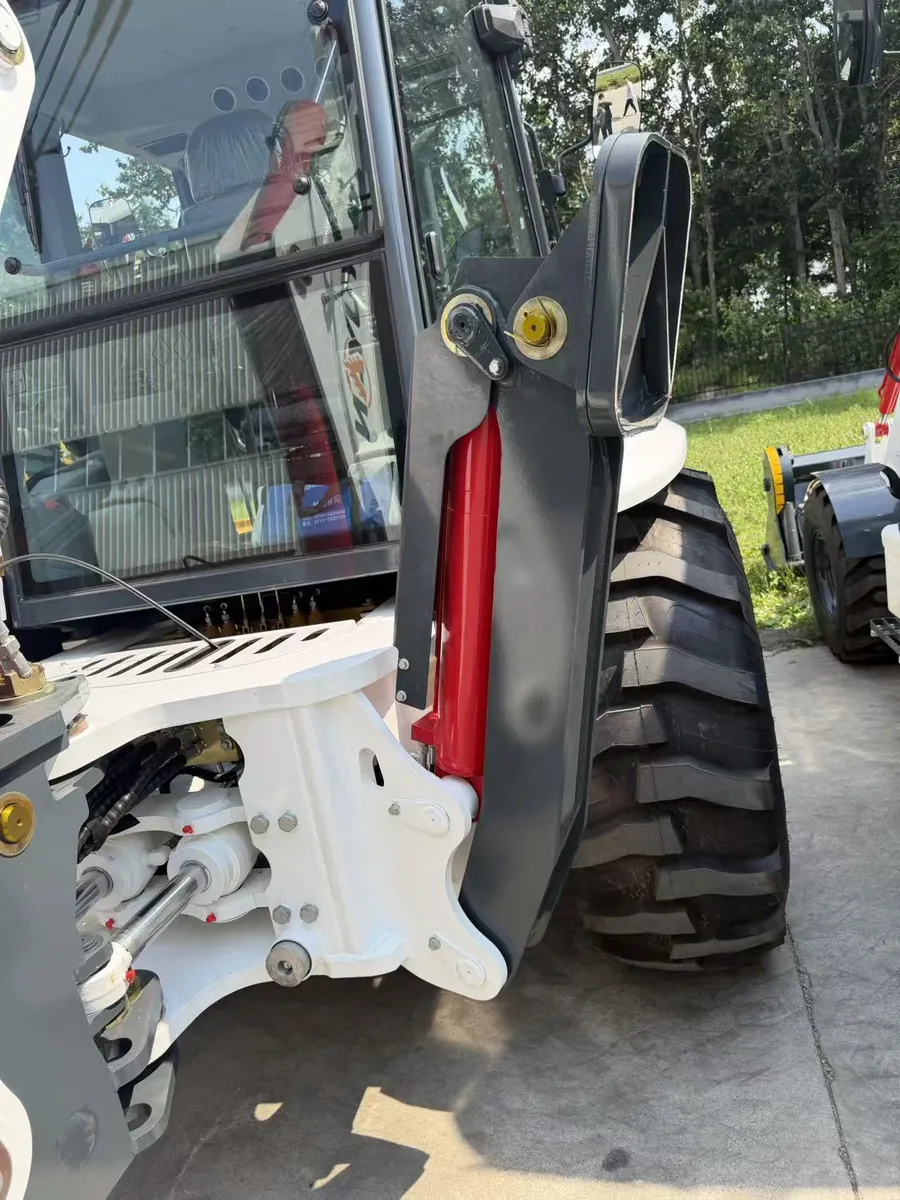
Record the first reassembly and trial run as a traceable acceptance document, noting who inspected, which connections were restored and which items remain incomplete. If you do not have the operating documents for the corresponding version or cannot confirm the installation location of a disassembled part, verify with the supplier before attempting to operate to rush into work. The test record should identify the machine serial number and keep images from before and after any anomaly so technicians can distinguish issues originating in packing, transport or reassembly that require further inspection.
If you find transport damage, the CTU Code recommends documenting it and notifying, as appropriate, the carrier, the unit operator and the shipper. Your file should include the machine serial number, container and seal numbers, the corresponding line on the packing list, photos of opening and unloading, close-ups of the damage, discovery date and functional check results. Compare pre-shipment records with arrival condition and retain related packing. If insurance applies, contact the insurer according to the policy.
Do not carry out extensive repairs before you have sufficient records and then try to prove the original damage. You can stop use, secure the site and take necessary safety measures, then agree inspection and disposition with the parties involved. Verify notice periods, inspection requirements and liabilities under the actual transport contract, the insurance policy and the sales agreement. A complete record does not guarantee compensation, but it helps determine whether missing parts or damage originated at the factory, in transit or during reassembly.
If you plan to import a YUYAN 388 to Latin America, provide the destination port, number of units and the shipment methods you want to compare to request a written quotation. We can help verify the specific version, parts list, packing and lashing details, scope of transport coordination and reassembly support conditions so you know how the machines will be dispatched and what you will need to receive them before confirming the order.
Frequently Asked Questions
Can the YUYAN 388 be loaded into a 40HQ without disassembly?
Do not make that decision based on the machine dimensions published here. The overall 6,050 × 2,465 × 3,813 mm contour exceeds the example doorway’s width and height; this article clearly notes optimized disassembly for shipment. Request the transport contour and disassembly plan for your order, then have the loading crew confirm with the carrier.
How many YUYAN 388 can fit in a 40HQ?
If you intend to load 2 units into 1×40HQ after disassembly, confirm for the actual order the exact version, attachments, packaging of disassembled parts, in-container layout and lashing, and obtain confirmation from the loading crew and the carrier; do not treat that proposed quantity as a guarantee applicable to all configurations.
Which parts are removed for container loading?
It depends on the configuration. For YUYAN backhoe shipments by container, the front loader bucket is removed; the complete list is confirmed in the quotation attachment and the actual packing list. Request an itemized list of removed parts, quantities, originating machine, fasteners and packing marks, and obtain reassembly instructions.
Container, flat rack or RoRo— which should you choose?
First review the confirmed transport dimensions and whether you can arrange reassembly, then ask logistics to compare services available at the destination. For a closed container, confirm the disassembly and reassembly plan; for a flat rack, confirm clearance, protection and lashing; for RoRo, confirm handling conditions and the shipping route. If necessary, also evaluate breakbulk; do not let the model alone determine the method.
Does an FOB quotation include all transport and destination costs?
No, it does not include all landed costs. The machine is quoted by configuration; the written offer prevails. Please confirm separately the main carriage, insurance, destination port charges, taxes, local transport and re‑packing; the items included and the delivery point should be specified in the written quotation.
What should you do first if parts are missing or there is damage upon arrival?
Check the container number, seal and packing list; record the location of packages, machine serial number and any damage, and stop any unsafe use. Keep evidence from before shipment and of the unpacking, and contact the seller, carrier and applicable insurer in a timely manner as agreed. Claim deadlines and requirements depend on the actual contract and policy; do not carry out extensive repairs before documenting the situation.
Sources consulted
- Hapag-Lloyd: interior and door of the 40-foot High Cube container (in English)Hapag-Lloyd
- Maersk: flat rack, out-of-gauge and break-bulk cargo (in English)A.P. Moller - Maersk
- Wallenius Wilhelmsen: RoRo transport of construction machinery (in English)Wallenius Wilhelmsen
- IMO: scope and nature of the IMO/ILO/UNECE CTU Code (in English)International Maritime Organization
- IMO: CTU Code, guidance on cargo securing, sealing and discharge (in English)IMO / ILO / UNECE
- ICC Academy: FOB delivery and responsibilities under Incoterms 2020 (in English)ICC Academy
External sources explain general rules; specific taxes, permits and contractual conditions depend on the destination country authority and the written contract.
With the target model and destination port, the next step is to verify the specific equipment and the quotation.
Submit your purchase request ↗Back to the purchasing guide ↗