
Key points
- The nominal capacity applies only with minimum radius, basic boom, outriggers fully extended and full counterweight; the actual lift capacity must be read from the crane’s load chart for the actual radius and boom length. If the actual radius falls between two entries, use the larger radius value.
- Compare the total suspended weight: the load plus hook block, wire rope slings, shackles and lifting accessories. If a jib is fitted, apply the table’s specified deduction. Many load charts already include the hook and sling weight in the rated total capacity—follow the notes on that crane’s chart.
- Allow a margin: when selecting a crane, keep routine lifts to about 75% or less of the rated capacity for that configuration. The U.S. Army Corps of Engineers safety manual classifies lifts above 75% of rated capacity as critical lifts requiring a written lift plan. The closer you position the crane, the lower the percentage that same load represents of the rated capacity.
- For a used crane, besides capacity check the load chart that matches the serial number, ensure the moment limiter functions correctly, confirm counterweights and jib are complete, inspect the boom and outriggers, and arrange transport using the actual measured dimensions and weight. Confirm import requirements with a customs broker in the destination country.
What is rated tonnage: the maximum rated lifting capacity under ideal conditions
The “70 ton” or “100 ton” in a crane model is the maximum rated total capacity. It applies only in a narrow condition: the crane on firm, level ground, outriggers fully extended, counterweight fitted per specification, using the shortest basic boom and at the minimum rated working radius (many truck cranes: 3 m). The working radius is the horizontal distance from the slewing center to the hook; as radius increases, the same weight creates a larger tipping moment and the rated capacity decreases.
The load chart links these factors: boom lengths across the top, working radii down the side, and each cell shows the rated total load for that boom length and radius. Short radii values are usually limited by structural strength; long radii values are limited by machine stability. In manufacturer charts prepared under the U.S. stability test code SAE J765, the rated value does not exceed 85% of the tipping load with outriggers fully extended and does not exceed 75% with outriggers fully retracted (for example, see the Grove truck crane load chart). This margin is a designed stability reserve, not allowance for overloading; U.S. OSHA 1926.1417 prohibits operating a crane above its rated capacity.
| Working radius | Basic boom 11.2 m | Boom 18.9 m | Boom 26.6 m | Boom 34.3 m | Fully extended boom 42 m |
|---|---|---|---|---|---|
| 3 m | 70.0 | 36.5 | 22.5 | 17.0 | 9.2 |
| 5 m | 47.0 | 25.5 | 19.5 | 13.5 | 7.4 |
| 7 m | 29.5 | 17.0 | 15.2 | 9.3 | 6.5 |
| 9 m | 17.5 | 9.5 | 8.0 | 7.0 | 4.8 |
| 12 m | — | 5.6 | 6.0 | 4.2 | 3.0 |
| 16 m | — | — | 2.85 | 1.9 | 1.6 |
| 20 m | — | — | — | 1.1 | 1.1 |
ImportantThese are values from the public datasheet of XCMG’s previous-generation QY70K (rated total lifting capacity includes the weight of hook and slings; outriggers fully extended, lateral and rear working areas). They are shown only to explain how to read the chart and are not the performance chart for the QY70KC on this site. Every crane must be used only with the performance chart that corresponds to its model, configuration and serial number.
Step one: sum up the hardest lift in four figures
Before choosing capacity, clearly describe the project’s most difficult routine lift. The hardest lift is not always the heaviest; it is often the one that combines weight with long radius or with great height.
- Load weight: the actual weight of the heaviest piece, preferably from the nameplate, drawings or weighing data; add the weight of lifting accessories, spreader beams, wire-rope slings and shackles.
- Working radius: the horizontal distance from where the crane can be positioned to the pick point and to the set-down point; use the larger of the two. Trenches, excavations, existing structures and underground utilities often prevent placing the crane where you want.
- Lifting height: the highest obstacle the load must clear and the placement height, plus the height of slings and accessories. Height determines how far the boom must extend; the longer the boom, the lower the rated capacity at the same radius.
- Outriggers and ground: whether the outriggers can fully extend, the ground bearing capacity and the outrigger pad plan. The QY70KC spec on our site lists outrigger spans of 6.545 m longitudinal and 7.9 m transverse; leave that space clear on site.
Add two more items: lifting frequency (a one‑off lift or repeated lifts and moves every day) and whether you need lifting plus transport (lift and then carry the load on the same truck). The first affects buy vs. rent; the second determines whether to consider a truck-mounted straight-boom crane or a mobile crane.
Step two: calculate the total load and look up the real radius in the chart
Example using the QY70K capacity chart. Lift a 7.8 t piece; estimate hook block, wire‑rope slings and shackles at 0.7 t (actual per the hook nameplate and accessories), for a total lifted weight of 8.5 t. To clear a nearby structure you need an 18.9 m boom.
- If the crane can be positioned at a 9 m radius: with an 18.9 m boom and 9 m radius the chart shows 9.5 t; the total load is 89% of that, exceeding 75% — a critical lift with very small margin.
- If the actual radius is 9.5 m: between 9 m and 10 m you must take the larger radius of 10 m per the chart notes, which allows only 6.6 t. The 8.5 t exceeds the rated capacity by 1.9 t — you cannot lift.
- Move the crane in to a 7 m radius: with the same boom the rated capacity is 17.0 t and the total load represents only 50%.
The same 70-ton crane lifting the same 8.5 t load can go from “cannot lift” to “using half the capacity” just because the crane is parked 2.5 m closer. So before selecting capacity, confirm on site where the crane can be positioned and whether the outriggers can fully extend; if the crane cannot get closer than 9.5 m, you will need a higher-capacity crane or a boom configuration better suited to the lift, or you must change the lifting method.
ImportantThis example only explains how to read the chart and perform the calculation; it does not replace a lift plan. Actual lifts must be defined by qualified lifting personnel using the crane’s load chart, site conditions and local regulations.
How much margin to leave: why 75% is common
Values in the load chart are rated limits, not recommended working values. In a real lift, weight-estimate errors, wind, ground settlement, dynamic load during hoisting and swing while slewing all consume reserve capacity. OSHA 1926.1417 requires the operator to verify before lifting that the load is within the rated capacity: if the weight cannot be confirmed from a reliable source, it must be checked at lift start with a weighing device or the moment limiter, and if it exceeds 75% of the maximum rated capacity at the longest radius, the weight must be verified before continuing. The U.S. Army Corps of Engineers safety manual EM 385-1-1 also classifies lifts exceeding 75% of rated capacity as critical lifts.
For selection and planning, a common practice is to keep routine lifts at or below about 75% of the charted rated capacity for the given configuration; lifts above that percentage are treated as critical lifts and require a written plan. High wind, outriggers that cannot fully extend, or lifts over the truck front must be confirmed against the machine’s load chart and manual; OSHA also requires that wheel-mounted cranes not lift over the front area unless the manufacturer permits it.
Step three: choose the tonnage class by job
| Type and range | Typical tasks | What to consider | Models on the site |
|---|---|---|---|
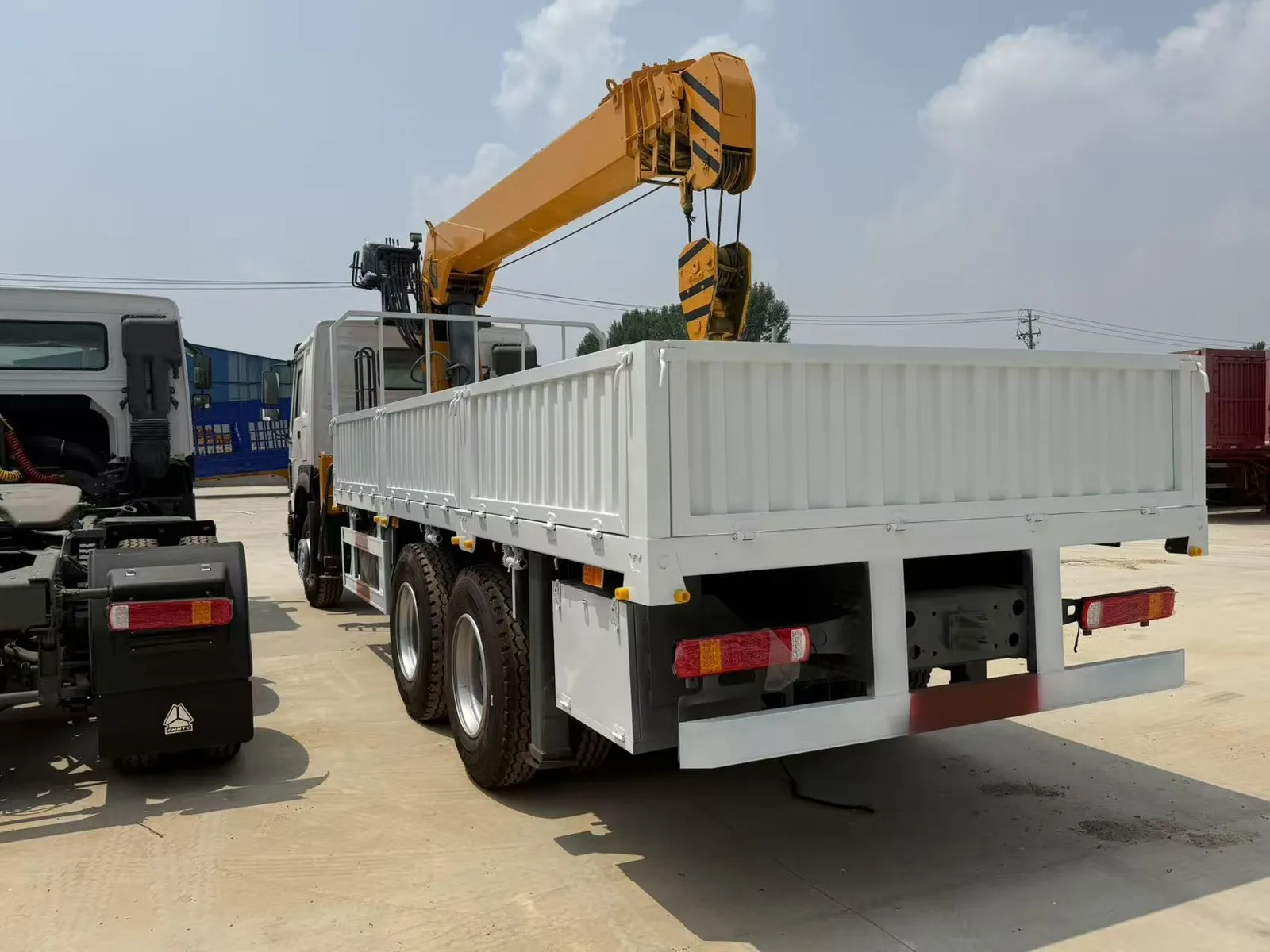
| Straight-boom truck crane (8–16 t) | Loading, unloading and short-distance lifting of steel, construction materials and equipment; the truck lifts and carries by itself. | The rated value applies only at short radii of 2–3 m and falls quickly as the boom extends; the crane capacity and the truck-bed payload must be checked separately. | SINOTRUK HOWO 6×4 truck crane 14 t, US$32,800 |
| 25–50 t mobile crane | Installation of small to medium components and equipment; routine lifting in factory buildings and municipal works. | Easy to move and requires less space; capacity at large radii and heights is limited—verify on the performance table. | Not listed on this page yet; send the lifting parameters for a quotation. |
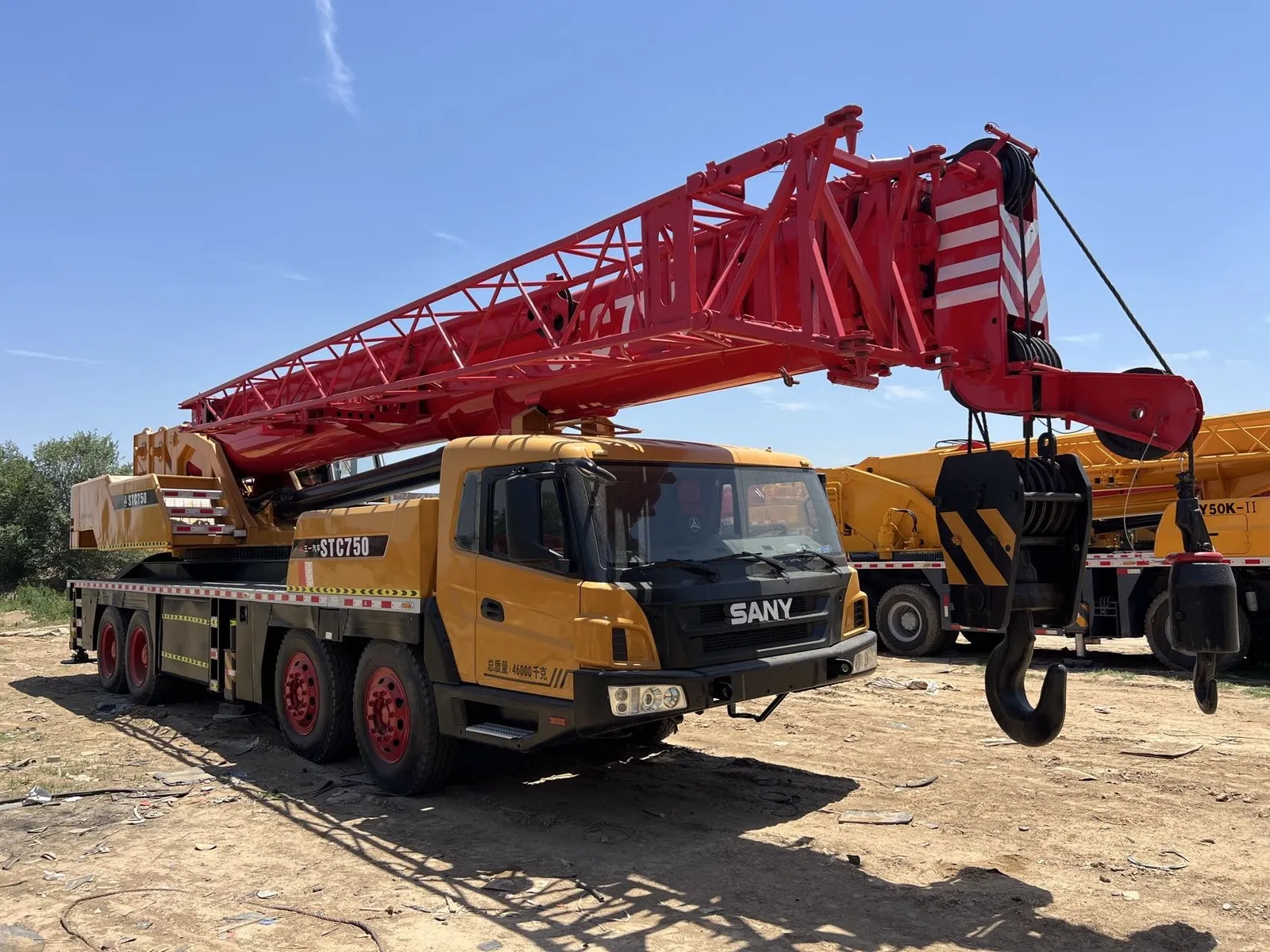
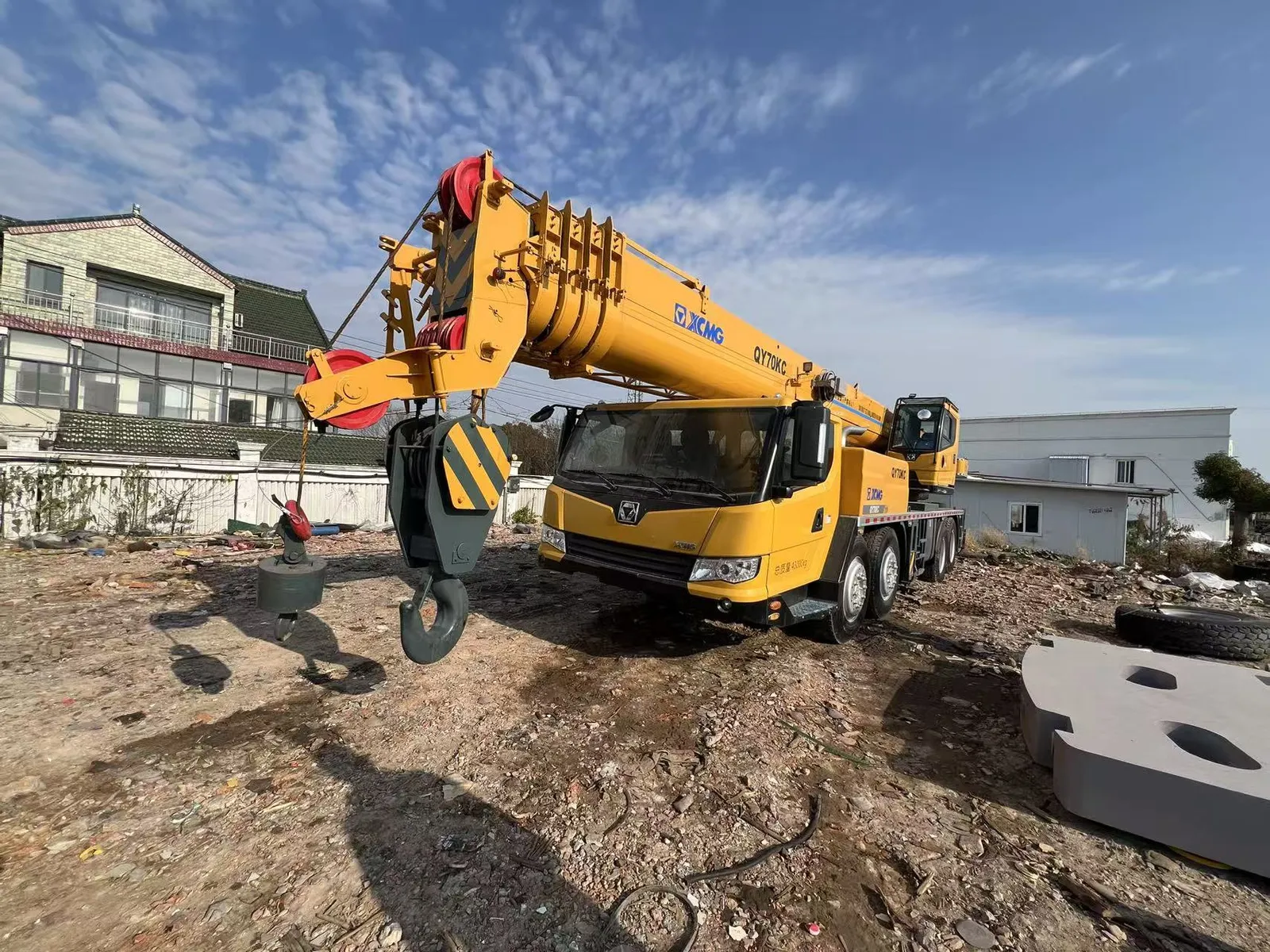
| 70–80 t mobile crane | Medium and large lifts of steel structures, bridge beams and industrial equipment, or jobs requiring greater radius and height. | Heavier vehicle and larger outrigger span; the QY70KC has a gross running weight of 44,800 kg and a transverse outrigger span of 7.9 m. | XCMG QY70KC 70 t US$70,000; SANY STC750 75 t US$90,000; XCMG 80T US$73,000 |
| 100 t mobile crane | Heavier components, larger radius, or higher lifts | Higher demands for transport, counterweight and site space; boom length and configuration vary by model—check the unit’s data | XCMG 100 t US$120,000 |
Choose capacity based on the project’s most demanding routine lift, not on an occasional extreme lift. Higher capacity increases purchase price, vehicle weight, stabilizer footprint, transport and sea freight; for a large item appearing once or twice a year, renting a higher-capacity crane locally is often more economical. Conversely, if the crane works near its rated capacity daily, wear and risk rise, so choose one class higher.
Truck-mounted cranes need special attention to radius. Public specs for the XCMG SQ12SK3Q straight-boom truck crane show a maximum lifting moment of 30 t·m: 12 t at 2.5 m, 6 t at 4.8 m, 3.5 t at 7 m and only 1.8 t at 12.5 m. If you must lift cargo from the bed to a point 7 m out, this 12 t class truck crane can lift only about 3.5 t.
Step four: check outriggers, ground, counterweight and working area
- Stabilizers: load charts are given by stabilizer position; values for full extension, half extension and no stabilizers (on tires) differ. If on site you can only half-extend, use that chart, not the full-extension values.
- Ground: all charts assume firm, level ground. If bearing capacity under the stabilizers is insufficient, use bearing plates or mats to spread the load and, if necessary, have a professional calculate it.
- Counterweight: the table corresponds to the specified counterweight. On a used crane, confirm the counterweight blocks are complete and match the table; with a different counterweight, the lifting capacity is different.
- Work zone: on many truck cranes the rated capacity differs between the side, rear, and front work zones; check which zone the spec chart for that crane is indicating.
- Jib: With the jib installed, reduce the main boom’s rated capacity per the table notes (for the QY70K above, deduct 2,000 kg). Whether the jib is included with the crane and its condition must be stated in your quotation.
Used crane: what to check besides rated tonnage
With the same rated tonnage, the actual condition of used cranes can vary greatly. A crane accumulates both chassis travel wear and superstructure lifting wear; when requesting a quote, ask for and compare the following information:
- Unit identity: nameplate, full machine serial number and year of manufacture, plus the load chart and operator manual corresponding to that serial number. Without the load chart you cannot confirm how much it lifts at each radius.
- Safety devices: that the load moment indicator displays and alarms correctly and is not bypassed, and that the height limiter, anti-unwinding protection and hook latch are in good condition.
- Boom and telescoping: whether sections have repair welds, deformation or cracks; whether sections stick when extending; wear of sliding shoes; and any leaks in the boom hoist and telescoping cylinders.
- Wire rope, sheaves and hook: whether the wire rope has broken wires, crushing or rust; wear in the sheave grooves; the hook nameplate and any deformation of the hook opening.
- Outriggers and slewing: whether outrigger cylinders hold position without creeping; whether outrigger boxes or the chassis have cracks; slewing bearing backlash and the condition of the slewing gearbox.
- Chassis and engine: travel mileage, engine hours and superstructure working hours; condition of the transmission, axles, brakes and tires; and maintenance records.
- Operation videos: cold start, outrigger extension, and complete main boom actions—hoist, telescoping, slewing and winch—preferably including a test lift with a known weight.
Before payment, YUYAN can arrange, as agreed, a video, on-site or third‑party inspection; timing and costs are confirmed separately. Our used-crane category page also includes a checklist of lifting and verification data to prepare when requesting a quote.
Transport and import: calculate with the crane in transport configuration
A truck crane is quoted by tonnage, but shipped by its actual size and weight. The QY70KC spec sheet on our site lists overall dimensions of 14,700 × 2,790 × 3,820 mm and a traveling weight of 44,800 kg. Before dispatch, confirm the unit’s measured dimensions and weight, whether the counterweight and auxiliary jib will be removed and shipped separately, and how they will be lashed. Then compare roll-on/roll-off with other suitable ocean options, and confirm with the carrier the loading/unloading steps and reception conditions at the destination port.
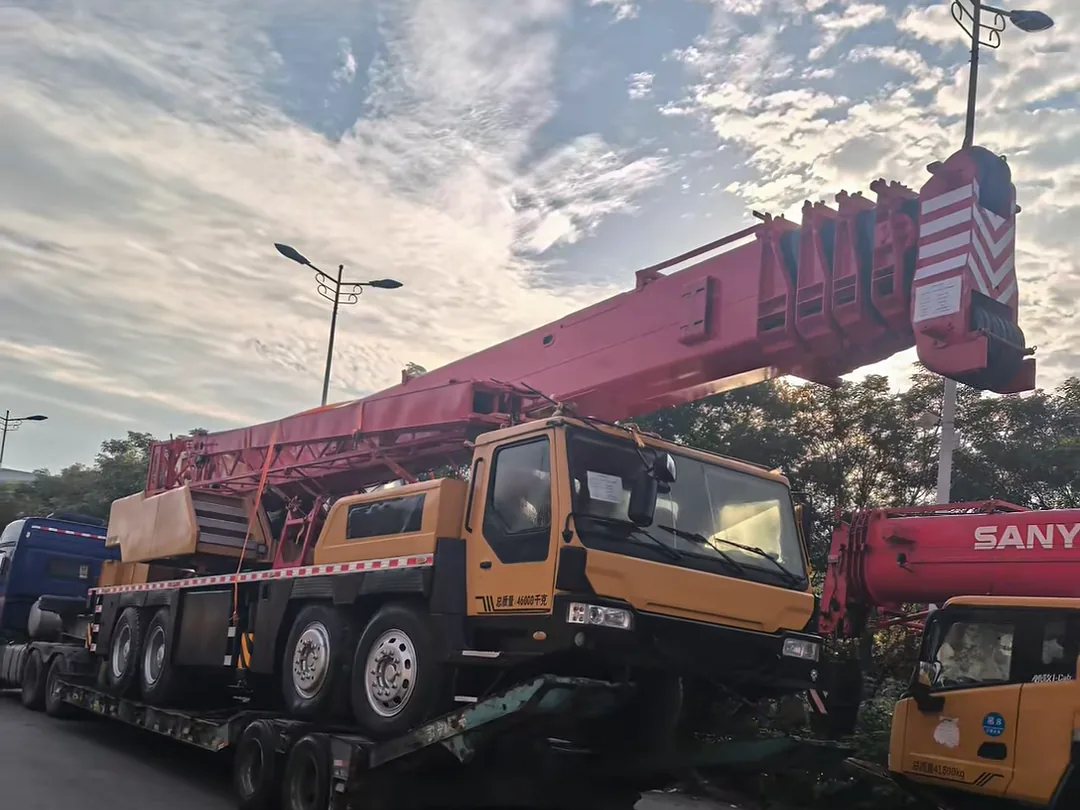
For importation, a used crane is used machinery, and the destination country may require import licensing, age limits, emissions compliance, or vehicle registration. In Colombia, for example, Decree 925 of 2013 classifies used, refurbished, and remanufactured goods as “products under special market conditions” that require prior import licensing, and the application must state the year of manufacture and condition. Before ordering, ask your local customs broker to confirm under the tariff code; YUYAN can assist with export documentation and arrange shipment per the Incoterm you choose.
YUYAN used cranes: how to request a quote
YUYAN directly supplies used cranes from brands such as XCMG, SANY and SINOTRUK HOWO. Our site currently lists a 14 t truck-mounted crane and 70–100 t truck cranes. Tell us your lifting job and we will quote a specific unit.
- For a quotation, provide: the heaviest piece weight and lifting accessories, maximum working radius, required lift height, whether the outriggers can fully extend, the destination country, and the delivery terms.
- We will send photos of the unit, operation videos and the available load-chart data; the written quote will state the machine identity and included equipment, such as ballast and jib.
- Site prices are reference FOB prices, not final quotations; the unit price, configuration and delivery terms are confirmed in the written quotation.
Frequently Asked Questions
Can a 70-ton crane lift 70 tons?
Only under the most favorable conditions: minimum rated radius, basic boom, outriggers fully extended and full counterweight. For example, the public QY70K chart shows 70 t at 3 m radius with the basic boom, only 17.5 t at 9 m; with the main boom extended to 42 m, the capacity at 3 m is only 9.2 t. The actual lift capacity must be checked in that machine’s load chart for the real radius and boom length.
Do I need to include the hook and slings weight?
Yes. Compare the total lifted weight: the load plus the hook block, wire‑rope slings, shackles and lifting accessories. Many load charts already include the hook and slings in the rated capacity, and when a jib is fitted a deduction may be required; follow the notes on that machine’s chart.
Is it safer to choose a larger tonnage?
A larger capacity gives more margin, but increases purchase price, vehicle weight, outrigger footprint, transport and sea freight costs, and raises road and site requirements. Typically select for the hardest routine lift and keep total lifted weight below around 75% of the rated value for that configuration; for an occasional oversized lift, rent a higher‑capacity crane locally.
Truck‑mounted crane or mobile crane?
If you need to "lift and carry"—for example loading, unloading and delivering materials, steel or equipment—choose a truck‑mounted crane; if the work is mainly lifting and you need greater capacity, radius or height, choose a mobile crane. A truck‑mounted crane’s rated capacity only applies at short radii of 2–3 m and falls off quickly as the boom extends; verify the crane capacity and the truck bed payload separately.
What if the used crane has no load chart?
Ask the seller to provide the original load chart and operator manual by the machine serial number, or request them from the manufacturer. You must not substitute the chart of another model with the same tonnage: values vary significantly with model, boom length and counterweight configuration.
Why is it commonly said not to exceed 75% of the rated capacity?
The chart values are limits, and in real lifts weight error, wind, ground settlement, and dynamic load consume the margin. OSHA 1926.1417 requires that when the load weight cannot be confirmed, if it exceeds 75% of the maximum rated capacity at the longest radius you must verify the weight before proceeding; the U.S. Army Corps of Engineers classifies lifts above 75% of rated capacity as critical and requires a written lift plan.
What must you confirm before importing a used crane?
First ask your customs broker to confirm by tariff code the import license, age limits, emissions and vehicle registration requirements for used machinery. For example, Colombia requires a prior import license for used goods. YUYAN can assist with preparing export documents and arranging shipment; specific import requirements must be confirmed by your customs broker.
Sources consulted
- OSHA: 29 CFR 1926.1417, Crane Operations (in English)OSHA
- U.S. Army Corps of Engineers: Critical Lift Plan form EM 385-1-1 (in English)U.S. Army Corps of Engineers
- American Crane School: How to Read a Load Chart (in English)American Crane School
- Grove truck crane load chart and notes (English)California Crane School
- XCMG QY70K: specifications and load chart (English)Crane Network
- XCMG SQ12SK3Q: truck-mounted crane datasheet (Chinese & English)wme.cn
- DIAN: Decreto 925 de 2013, import registrations and licenses (in Spanish)DIAN
External sources explain general rules; specific taxes, permits and contractual conditions depend on the destination country authority and the written contract.
With the target model and destination port, the next step is to verify the specific equipment and the quotation.
Submit your purchase request ↗Back to the purchasing guide ↗